Tuesday, August 24, 2010

Harry S Truman State Park August 16

90 miles
I started the day chased by dogs: those little puppies from the night before chased after me, whining and pleading, the entire three miles or so until the gravel was replaced by pavement. There I was able to pick up speed, but they kept following me regardless and I could hear them whining and barking after me until the next town. It really was miserable, but I hope that someone in the town will pity them and take them in.

I fought a nasty headwind the rest of the day. I was happy when I was going over 10 mph; downhills that the day before would have pushed me into the mid-twenties today required effort to get up to 15. I trudged through the unchanging scenery until I made it to the town of Clinton.

I had big plans for Clinton. It was the biggest city in a while, maybe since Ottawa; it was rumored to have a classy downtown; and I was supposed to arrive at a perfect point in my day for a lunch stop. I only had 60 miles to do today, so I thought I'd have plenty of time. By the time I'd reached Clinton, though, I realized it would be pushing it to eat at a restaurant, but I had been looking forward to it all day so I decided to take the risk.

Long story short, I never found the old downtown and spent too much time looking for it. I decided to hit Arby's instead. Actually, the ham sandwiches and root beer went down just fine and I had a pleasant chat with an employee, and I got out of there with no regrets.

I then headed on to the next stage: about twenty more miles to Truman State Park. Ah, but I took the wrong road; a four-lane interstate. Though there was a "share the road" sign, it was not a very pleasant ride. But, man, it was fast: I was headed south, so no headwind. I finally figured out after about four miles that I had taken the wrong road and headed back.

I hurried across all four lanes to the opposite side and headed north back to Clinton. After a while I came upon a stooped old man fiddling with the trailer attached to his huge, red American truck. The right tire on this trailer had blown spectacularly, but he couldn't get the jack to rise high enough to reach the bottom of the trailer. Being uninclined mechanically (unless it is a bicycle we are talking about), I was pretty useless. My brilliant suggestion was that he call someone. Luckily, a helpful man in his own huge truck came to the rescue. I watched while he put the jack under the axle of the trailer, explaining he himself had had a trailer blowout just the week before, and deftly replaced the blown tire. I think I replaced the bolts that had secured the spare. I felt absolutely useless (a third wheel, so to say), but I decided to see the thing through and did. The old man was grateful, and then we parted.

The next major milestone was halfway from Clinton to Truman Park, a city named Tightwad. I had seen the name years before and had from that time been curious what sort of city would call itself such. Apparently, a city starving for citizens: the population was somewhere around 70, with a lone (but very large) gas station and souvenir shop. I bought water, but passed on the Tightwad coin purse.

Outside Tightwad the road quickly became more hilly and forested, and I soon found Truman Park and a suitable campsite.

I was able to make food without anyone around to whine and beg, so I reconstituted some absolutely delicious black bean dip from the health food store and ate it with corn chips. I was in heaven. Then I ate a Malaysian dish mixed with camp-cooked quinoa, and was in another layer of heaven. Try eating after 50-100 miles on a bike: saltines taste like Ritzes, bananas taste like a banana split, and Gatorade tastes like Chimay. I will be eating at this restaurant again.

I missed the sunset in my food orgies. It's oddly warm inside my tent even without the rain flap. Once again a half moon, tonight a true half-moon, rose. I noticed it while biking, that hint of white against a clear, blue sky. I'm a bit too tired to enjoy it fully. The tree frogs echo, then harmonize, then echo. I let into my tent little bugs that look like white fairies. They don't care that they look like fairies, of course, but I think they are better than mosquitoes. I'm looking forward now to sleep, a late morning, and an easy day tomorrow (please!).

Trip to the Missouri Ozarks


View Larger Map
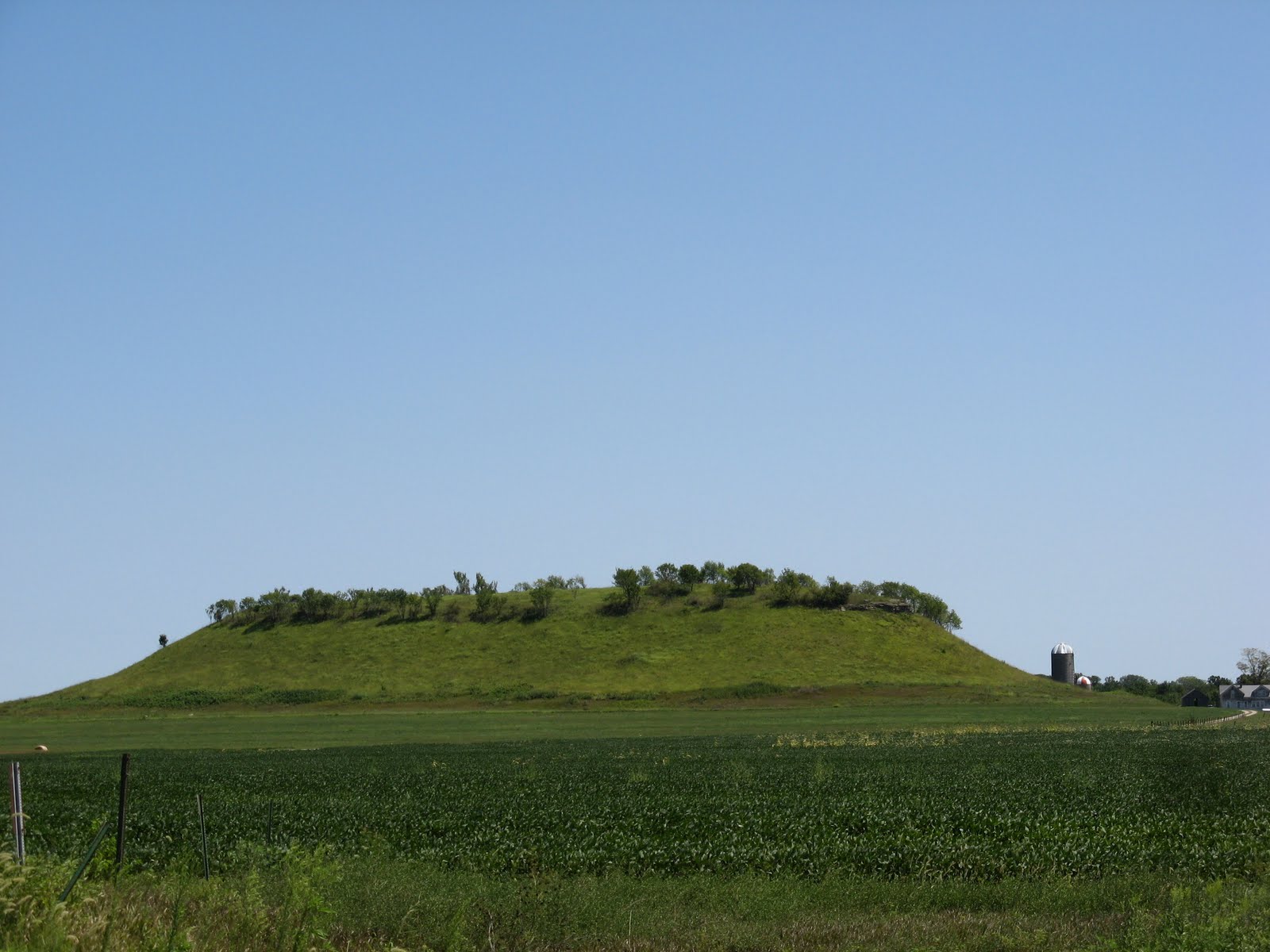
I've just gotten back from a trip to Ha Ha Tonka, in the Missouri Ozarks. It took a week and almost 600 miles, and was quite an experience. (The map above isn't quite right in a couple of minor places).

I got the idea of going for a long ride after looking at pictures of friends back in Japan climbing mountains: I really miss the mountains there, mountains anywhere! As many know, there aren't too many mountains in Kansas, so I was out of luck locally. But if I went somewhere, say by bicycle?

I had originally thought about going to the Arkansas Ozarks; not the tallest mountains in the world, but still an interesting challenge. But I couldn't figure out a way to make it down there and back in less than a week, and any more time seemed just too long. I don't really know why, now; something about wanting to not spend too much time neglecting the job search. So I settled on the Missouri Ozarks, and one of the closest spots, Ha Ha Tonka, was also highly recommended, so that's where I set my destination.

I meant to leave two weeks ago, but the day before departure I grasped that I just did not have the right equipment for the job, and I used that as an excuse not to set out just then, because it sounded tougher than that I was just waiting until the temperature got below 100 F. So I stocked up on the correct equipment, studied maps, enjoyed the air conditioning and waited a week. I left last Sunday, August 15th.

I took a diary while I was on the road, so I'll just be copying that in here verbatim. It may get a bit wordy, so I hope you'll forgive any unnecessary length. I'll be putting each day except the first in separate entries as I get to them. The first is below:

Aug. 15
96 miles
La Cygne Lake


Today I worked my way to La Cygne Lake via the Prairie Spirit Trail. Relatively uneventful, with your standard eastern Kansas farm scenery. Soybeans, corn, cows and horses. And hay, lots of hay.


The Prairie Spirit Trail, from Ottawa to Iola, is quite an accomplishment. It runs for 51 miles free of automobiles, mostly a pleasant, tree-lined jog.


I wouldn't really take it again for a couple of reasons: it costs money (I'm happy to pay, once) and it is bedded with packed gravel. The gravel really slowed me down and I'd prefer the paved road running parallel and not half a mile away if I were to go that way a second time. But it is great for a relaxed outing, say with kids. I certainly don't want to detract from these rails to trail efforts; like Missouri's extensive Katy Trail, these paths are a step in the right direction, though I'd like to see more gas money going to it than coming out of my pocket.

From the Scipio trailhead of the Trail, I turned east for a straight shot to La Cygne (pronounced La Seen). This, again, was uneventful, until I reached the city of La Cygne near the lake of the same name that was built to cool a power plant and where I hoped to stay the night. I had manipulated Google Maps' surprisingly useful bike directions to make them avoid I-69 and, despite its better judgment, it led me to a gravel road. I'm not much for gravel with my narrow tires, so I walked the bike a few times, fell down and scraped my knee, and screamed more than a few times (it was late in the day and I was tired). But by the end of it I'd learned a bit (it's easier to navigate gravel at a slightly higher speed; at a slower speed the rocks throw off your momentum more, making it easier to slide and fall) and in the end it didn't take me all that long.

I have never been so happy to see smokestacks, though. As I've said, the lake was built to cool a power plant, so when I saw those familiar white and orange towers, I knew I couldn't be far from the lake and my campsite. I arrived a bit later at an unmarked campground, welcomed first by a live but burning tree and then by abandoned twins.

The tree was and still is a mystery: a well-constructed pile of kindling, sticks and larger wood meant for a camp fire was standing piled nearby, but a large fire had been lit in the bole of a tree. I was looking for my own campsite and that didn't look very promising, so I moved on.

The abandoned twins are a couple of black puppies that first hounded a couple of recreational fishermen until they scared them off, and who then came and begged in my direction. They've taken up residence here, near my campsite. They're actually pretty well-behaved, and I feel sorry for them. I say that because they are sleeping now and not bothering me.


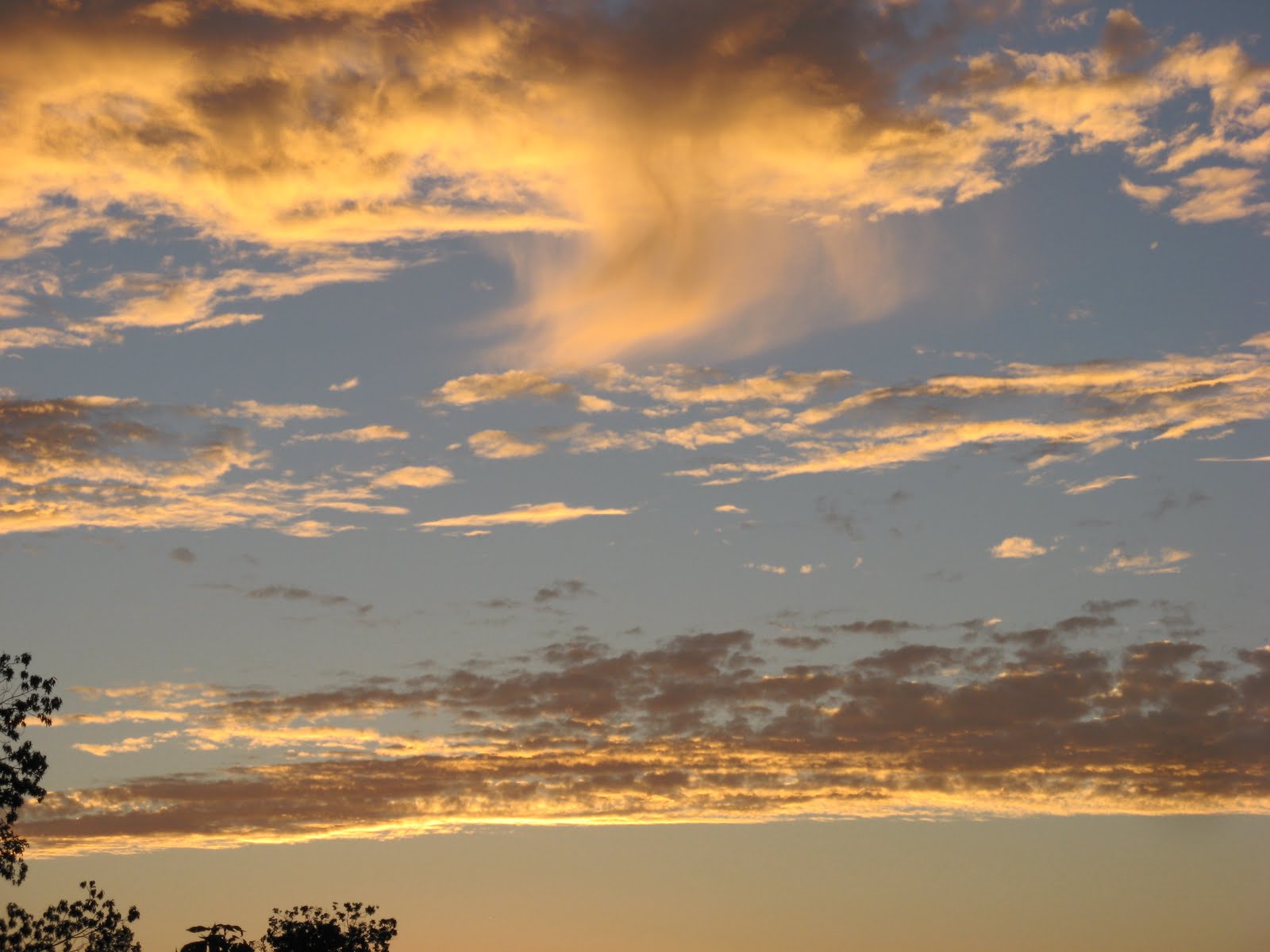
The coolest day this week is now cooling even more, and the sunset illuminates an odd, puffy formation of cloud. A near half-moon has come out, and it is a restful end to a mostly positive first day.

Wednesday, March 31, 2010

#19 Food

Food, like the bicycle, is everywhere. But food is not the same in Japan, as many people know. Octopus tentacles cooked in dough (delicious). Pufferfish sashimi with a side of soy sauce and wasabi (also very good). Rotten ("fermented") soy beans (part of my breakfast every day). And if you've only had instant ramen, you are missing out on one of the tastiest (if also very unhealthy) comfort foods. For some reason, Japan has tested the limits of food, and though most countries have their oddities, Japanese people seem to be particularly adept at seeking out the most fascinating ways of eating.

More than this, though, it is the Japanese enjoyment of food that is striking. When I first started watching Japanese television, I was amazed by how many shows there were about food. Of course there are cooking shows, just like in the US, but talk shows invite their guests to sample a dish; game shows, even those that don't revolve around food like Ryori no Tetsujin (or Iron Chef) will include food in the game in some fashion. Travel shows must include local eateries, and often the eatery is more important than the program's destination; sometimes, it is the destination.

And every dish is relished. With the first bite it is "uma'!" or "oishii--honto ni oishii" (both mean "tasty", "delicious"). Faces contorted in the most sublime pleasure. Women titter and blush, while men sit back and let out sighs after each bite.

When I first saw this in the US on Japanese tv there, I thought it was all a show, acting; every one of the people making these comments was a performer of some kind. But then I had my first meal here, and I too was struck by how remarkably tasty it was. I've had mediocre food here before, of course, but I don't remember being shocked at how good something was in the US more than a couple of times, whereas here I have more than once been spirited away by even quite simple fare. I'm not quick to give out compliments, a fault I'm aware of; all the more fantastic, then, is the meal that shortcuts this cynicism and grants me the unwarranted pleasure of expressing the most profound and deeply felt gratitude for good food. It is healing.

I've been introduced to hundreds of dishes, ingredients and ways of cooking here, and it would be pretty dull to list them all, I guess. But I do want to cover at least a couple of themes.

First is ramen. Like I said, if you have only had instant ramen, well, you haven't had ramen at all. Real ramen is just as bad, maybe worse for you, but if you only eat it once in a while, it satisfies like nothing else, in my opinion. There are thousands of variations, but usually there's a chicken stock or pork bone base, wheat noodles, chopped green onions, a mushroom of some kind, and a piece of pork. I'm generally vegetarian these days, but ramen is something I still get cravings for. See the movie Tampopo if you haven't yet, then go to Japan to eat the real thing. Tampopo restaurant in San Francisco's Japan town is pretty good, but not as sublime.

Next is tofu. I know, boring, right? Whatever. The problem with tofu in the US is that it is hard as rubber and couldn't soak up other ingredients if you fired at it with a shot gun. After searching for the hard stuff for about a month here, I got into momen, the slightly firm version. Cooked right, momen is fantastic by itself, but with shiitake mushrooms, a good dashi, maybe some oyster sauce, it is fantastic. And silken tofu, the really soft stuff, is very delicate and perfect with rice and bamboo shoots. Then there's atsuage, fried slabs of the rubbery stuff (you can also get silken tofu atsu age, which makes a nice, tender teriyaki steak). This is the one time I like the rubbery stuff: it's easy to make a taco/burrito filling chopped up and seasoned with some cayenne and cumin.

The next is yuba: I'm not sure how many people are familiar with it, but it is exquisite. I think they sell dried yuba in the US, but the fresh stuff is fantastic. Soy milk is cooked until a film develops; the film is skimmed and served hot, with soy sauce or some other seasoning, or as a wrapping for sushi. The texture is sort of like grilled mozzarella, but the flavor is more subtle.

Finally is the izakaya. I may have talked about it before, but an izakaya is the Japanese version of a bar. Really it is more like a family restaurant, with lots of alcohol. So you eat while you drink, a drape between you and other tables so that you and friends have privacy and can hear each other when you talk, but there is still the atmosphere of a night on the town. Often the food at an izakaya is as good as a regular restaurant, with an a la carte setup. There's no mingling, really, but these days that's not as important as it used to be. A nice place to relax and wind down after 12 hours at work.

I want to say more about food, but I think it's really, in the end, something you have to experience first hand. So try to make it to Tokyo sometime.

Sunday, March 14, 2010

#20 - Bicycles and Transportation

Of course, bicycles are found everywhere, and Japan is not the most bicycle-friendly place in the world. I do, though, think that the situation, at least here in Tokyo, is better than people imagine.

Now, I'm not talking about cycling, about road bikes or mountain bikes. I'm talking about biking in general.

Most of the bikes here are the heavy-duty tanks with a basket on front that are called mamacharis here (by the way, that is mama, for the typical housewife who rides the bikes, often with kids in the basket at the handlebars, to the market; chari is short for charinko, a cutesy word for bicycle). I have one, and all of my Japanese neighbors do, too. I, like my neighbors, use it for local trips, to the supermarket, conbini (convenience store), the dvd rental store, the train station.

It's something I never would have bought in the US, because I didn't see the need: clunky, ugly, heavy, and not particularly well-built. But I will have to get something like it when I get back. I do have a fast bike I use for commuting and exercise, but the mamachari is, like I said before, a tank, as well as a comfort. I'll give you an example of its "tankness": last year, a spoke broke on my commuting bike. I was late for work, and was really feeling energetic, so I decided to continue on and hope I could make it. About thirty minutes later, though, I heard another tinny "thwak", signaling a second broken spoke, and I knew I'd have to lock the bike up and scramble as fast as I could on foot to the train station (I leave early in case I run in to just this sort of problem). Good things come in threes (is that it?) and I broke a spoke on my tank very soon after. I immediately dealt with the commuter spokes, but I didn't really care about the tank; in any case, I suspected the tank could handle it. In truth, a year later I haven't repaired the tank spoke, and it still rides fine.

I mentioned above comfort, and I should probably explain that a bit. I ride my commuter at least three times a week to work. The saddle is up high and hard, the tires are pumped up as far they can go, and I've got clipless pedals; I don't feel comfortable riding it without gloves or a helmet. I usually lock it up, though I don't really need to. In other words, it is a bit of a hassle to ride for short trips. So the tank comes out at night for a trip locally. I would never ride it more than a couple of kilos, but it is set up perfectly for that La-Z-Boy feel: saddle way down and plush, bars bent back easily within reach, and soft tires that absorb every bump. When I ride the bike, even more than when I'm walking, I feel like I'm on a "stroll," waddling from side to side, not really paying attention to where I'm going, maybe even saying howdy to other folks on their charis (not really, but the impulse is there). That's what I mean by comfort.

The charis are built into the transportation system here (unlike the "cycling bikes," unfortunately). Again, this may be specific to Tokyo because the streets are winding and incomprehensible, but because of that winding incomprehensibility, cars usually stay off the back streets and stick to the monstrous-for-Japan-but-still-tiny-for-the-US main streets. So the back streets are left to strolling pedestrians and bicycles. On these back streets, you might forget that you are in the biggest city in the world, with their potted plants and their tottering old grandmas walking with tottering infants and their high-school punks riding side-by-side across the entire street. Bicycles even get to go down most one-way streets the wrong way, legally, with signs and everything to prove it. Oh, and they can ride on the sidewalk, something I avoid with my commuter, but that works well at the slow speed of the tank.

The main streets, of course, are another matter, and I won't deny I hate riding them. However, they beat the crap out of riding on any street in a big city in the US. Basically, it is for one reason: the drivers are polite. I'm not going to go into a big rant here about the idiotic phenomenon of road rage that seems to be an accepted part of life in many other countries because I said I wouldn't complain, but most of the time I can depend on drivers not to try to kill me to get to the next red light in time to stop. They do honk, but the funny thing is, they are usually honking not to tell me to get out of the way, but to make sure I know they are there (it took me a long while and a lot of my own road rage before I understood that). There are exceptions, of course, but most of the time...

Alright, obviously I could go on about the bike business for awhile, but I'll spare you. I'll leave you with this video about a bike park in Chiba (next to Tokyo). I've never been there, though it isn't far away; I may take a look some time before I leave. Anyway, it introduces the automated bike park there, but it also shows some of the everyday lifestyle in Tokyo (well, near Tokyo). Note: it is really, really loud.

Sunday, March 07, 2010

20 or So Things I Like About Japan

For those that haven't heard, I'm moving back to the US in May. Though basically I'm returning because I would have a hard time sponsoring myself to renew my visa, really I feel it's about time to get back and reconnect with friends and family, and so I'm looking forward to my return. On the other hand, I've been here almost four years and I have grown pretty comfortable. There are tradeoffs.

Thinking about leaving, often the first things that come to mind are the things I won't miss. There's no doubt Japan is very different from the US, and the differences can begin to grate, especially on a bad day. There will definitely be things I'll be happy to leave behind. And if you had asked me about a year ago (I don't really know why, but I was pretty burnt out on Japan at the time), I'd have given you a nice lengthy list. Somehow, though, my attitude has mellowed a bit over the past year.

I remember before I came here I read for hours on end the complaints and gripes expatriates had about Japan on various online forums. I knew a bit about Japan even then, so I took some of it with a grain of salt. Still, it did make me a bit apprehensive, and some people held a vehement hatred for Japan and Japanese, a kind of violent racism that I feared might grow in me.

Of course, the greater part of this fear and animosity was due to the ignorance and/or arrogance of the posters on those forums (and the forums are infamous for their nastiness). My experience has shown me that your reaction to a cultural difference is often a choice rather than ingrained, and so it sometimes is possible to accept the culturally alien worst and learn from, or at least have respect for, the culturally alien best.

In any case, I am leaving Japan amicably, and there are things I will miss about the country. As a sort of remembrance of my time here, I wanted to share some of the things I found here that I will find hard to replace in the US. So I've got a bit over 20 things I've come up with that I thought I'd write about over the next few weeks before my return. Many of them I've written about before in other contexts, but this will give me a chance to gather together some general thoughts about these subjects in particular.

Note that these are not directly criticisms of the US or any other country, though some of them are things I would like to see happen in the US. Most of them, though, are just pleasant things that I've found here. Hopefully it will be different from what people normally hear about Japan (there's no entry for the panty-dispensing vending machines everyone always talks about, for example), so that readers might find something new that interests them.

Sunday, September 27, 2009

I met a spaceman; Southern Japan Alps II


My second day in the Southern Alps started with a climb back to Jizo-ga-take. This time I meant to actually get to its peak, or, really, as close as I could get to the peak. You can't reach the very top without a rope, but I got a bit of climbing practice in anyway, edging up the rocks that surround the main spires of the peak. This was again very pleasant, and I spent well over a half an hour sitting and taking pictures from Jizo's high vantage.

I climbed down. Today my objective was my objective for the entire trip--Kita-dake, a non-volcanic mountain that stands second tallest after Fuji, though a distant second at 500 meters less. I gritted my teeth thinking I'd have to go down for half the day before going up again: I think I've said before I hate descents more than ascents. But that is the way it worked out, and there was no avoiding it.

At first there was a slight ascent to Takamine, then I began a long descent, followed the entire time by a fool with a bell. Bear bells are very popular in Japan, even in areas with as much traffic as Shinjuku station. I have even gotten my own, but that is because I prefer hiking in the less popular areas; but I just don't see the need to use one when you see other humans every 5 minutes. Still, I wouldn't complain but the man had an amazing ability to stay just a perfect distance behind me that I couldn't lose him, and yet he only once passed me. His bell was distracting, and it followed me like Jason Vorhees for the 4 hours I was climbing down to Hirogawara, the beginning of the climb to Kita-dake.

But about an hour from the bottom I was distracted from the distracting bell. I caught up with a man who had started the day in front of me, moving at a fair pace, but had slowed down near ten o' clock. He was friendly, and we chatted a bit as we climbed down. We went at about the same pace, and though we didn't talk about much in particular, we'd say things like "be there soon" or "be careful here," etc. I normally avoid conversation in the mountains, but maybe the Jason bell had acclimated me to society again. At least I forgot about the bell.

When we reached the valley, we started talking a bit. He was a carpenter from Wakayama who built traditional-style buildings and furnaces. I thought that was interesting. He asked me what I thought of the Mayan 2012 apocalypse; I told him I didn't know much about it, though I was curious. Then he told me he had had a dream long ago of a plague of locusts and of people being pulled up into the sky; this made me a bit leery. But he had never read the Bible and, though I didn't ask, I'm guessing he'd never read the Left Behind series. His manner was self-deprecating and, unlike other people I've met who go into these odd sorts of conversations, he had no agenda that I could see; it sounded more like he was sharing his pastimes. So I continued talking to him.

Then he said, in a very charming way, (keep in mind this is in Japanese) "I think I might be a space man." I laughed; again, I would normally start winding up the conversation at this point, staring straight ahead and walking a bit faster. But he was not threatening in any way, so I continued to listen.

Just like the dream of locusts and of people being pulled into the sky, he had had a dream, he said, where he found himself looking down on the earth from above, thinking "I'd like to live there..." He then found himself being born. Because it was in Japanese, I'm not sure if he was saying this was a memory of a dream or a dream of a memory, but I think it was the latter. He asked me if I thought I was a spaceman, and I considered this for a second.

I am quite in love with the solar system, and with stars. I've always had a particular fascination with Jupiter and, more recently, his moon Europa. Jupiter is a fascinating object, so incomprehensible, and a lot like the mountains of the world, so far removed from the money-making survival and bureaucratic politics of daily life. But it is none the less real; maybe, to my spaceman friend and I, those things are more real than the pretend dramas of daily life.

I long wanted to travel to the other planets, and when I was a kid I loved poring over books that portrayed life and colonization of other worlds. But as I've gotten older, I have turned back to earth, and the compulsion to find other worlds is looking less and less like a creative act of imaginative expansion and more like a desperate way to leave behind our failures here. For the time being, the Earth seems enough to me, and I'd rather not be able to see bases on the moon, reminding me of our collective short-sightedness, when I look up at the night sky. (By the way, though the two ideas coincide, I am not making an environmental argument here).

So I said "Boku ha machigai naku chikyuujin desu." I am without a doubt an Earthman. When he said later that he felt more like a spaceman than a Japanese person, I said the same thing, I am not an American, I am without a doubt an Earthman. I think we both liked our symmetry.

My spaceman friend was not going to the top of Kita-dake; we were walking to the bus stop as this conversation was going on. He was planning to go to Senjo ga take, a mountain I thought I might reach the next day. We said perhaps we'd meet on Jupiter some day, and I left him and headed up the mountain.

On the way up I debated over and again what I should do the next day. I had planned, as I said before, to go in a spiral around to Kaikomagatake, but it was looking more and more like that would not happen, so I was considering just hiking around Kita-dake, taking it easy the next day.

In the end I settled on a campsite near the peak of Kita-dake; I reached it after 11 hours, and I didn't feel like climbing Kita-dake and then hiking another hour to the next campsite. At that point it was getting dark and clouds were overtaking the peak, so I decided I would climb to the top the next day and watch the sun rise. Depending on how I felt at that point I would decide what to do next.

The mountain hut/campsite was high up--3000 meters, or 9800 feet. It was rocky, but the ridge was fairly wide, and there were a large number of places to set up a tent. I wandered around for a bit, hoping perhaps I could avoid sleeping inches from others, and I saw an adventurous camper had set up in what seemed a bit of a legal grey-area for an acceptable camp-spot. It was far from the toilet, but I decided to set up in the same area, though I gave my adventurous friend a wide berth. I was relatively alone.

I was exhausted and it was very cold, so I planned to watch the falling sun, eat a bit of left-overs (ie, I didn't have the energy to cook), and then head to bed. I took some pictures of the sun until I couldn't stand the cold wind, ate, and studied the map for the next day. I was soon cocooned in my sleeping bag.

I woke up at 12 am. I don't know what woke me up, but I never did get back to sleep that day. I felt perfectly warm, and there was no light; I didn't feel hungry or thirsty. I was still exhausted, but could not sleep. I tried stretching, and reading, and I even ate a little something to see if that would help. But nothing did, and I sat in my tent until the sun came up.

The sunrise was spectacular. Though there was a bit of cloud cover and I couldn't see some of the smaller mountains, at my vantage point I was able to see through a clear space to Mount Fuji. I felt a bit like I was on Venus; I was certainly a long way from home. I took a few pictures, then lay in my tent again until the winds knocked the tent down.

In the end I decided to go home that day. Once I started hiking again I felt a bit more energetic, but I was truly exhausted after four days of inadequate sleep. After hiking 11 hours the day before, four hours' rest was just not enough, and I didn't want to deal with the occasional frustrations inherent in hiking in that condition. I climbed to the top of Kita-dake, then took a different route down than I had taken up the day before (that was a few hours' hike in itself), then got on the bus and the train home.


I wish I could have continued, as this is likely to be the last long vacation before the snows, but I do feel satisfied with my trip. Ho'o sanzan in itself was worth exploring, and Kita-dake is the tallest mountain I have yet climbed. If you want me this winter, I'll be jogging through the (much shorter) mountains of Okutama and Nikko!

Thursday, September 24, 2009

Southern Japan Alps


This week is "Silver Week," or "Autumn Golden Week," a series of holidays with a name that refers to the more established "(Spring) Golden Week" in late April and early May. Like Memorial Day and Labor Day they signal the change of seasons, and it is common for Japanese people to travel to natural areas to take in scenery, hiking along with their bear bells and trekking poles, or taking the kids out to the local car campsite to hold a barbecue.

I decided to attempt a longer trip than usual, as this will probably be the last chance I get this year for more than a few days off (I had 6 days), so I went for the Southern Alps. Of three groups of mountains in Japan known as "Alps," the Southern Alps are the least developed and have the least visitors, though by no means was it empty!

The Southern Alps also contain the tallest mountain in Japan after Fuji, known as Kita-dake (North Peak). Kita-dake was my objective, though I planned to take in a large number of peaks in the range.

The first mountain, though, that I wanted to visit was Ho'o Sanzan, the Three "Phoenix" Peaks, Yakushi-ga-take, Kannon-ga-take, and Jizo-ga-take. I had seen pictures of Jizo-ga-take and was really impressed by the unique rock formations; when I found out how close it was to Kita-dake I knew I had to go that way.

A trip to the north part of the Southern Alps usually means a stop in the city of Kofu, known for its lack of wind (I suppose because of its location, surrounded on all sides by tall mountains?), then an hour-long bus ride into the mountains. I got off at the Yashajin trail-head for the approach to the first of the Ho'o Sanzan, Yakushi-dake.

Yakushi, Kannon, and Jizo are Japanese names for important bodhisattva: Yakushi is the Buddhist "doctor," Jizo is, in Japan, most often the protector of children, and Kannon is a hermaphroditic savior--as Kuan Yin in China, she is almost always female, where in India and Southeast Asia he is usually male; in Japan he/she is portrayed both ways, perhaps due to successive importation from the two regions. These bodhisattva are very popular in Japan and everywhere that Mahayana Buddhism is followed, and, with Amida-bosatsu, their names are used for mountains throughout Japan. I once climbed Amida-dake in the nearby Yatsu-ga-take range, something I wrote about in an earlier post.

My legs ached a bit more than usual, and I was a bit tired. I was actually starting late: I had planned to start my trip on Saturday, but for some reason I couldn't sleep until 3 in the morning, and with my train leaving at 5:50, I decided it would be best to start the next day instead. I slept well enough Saturday night, but I'd had several restless nights that week and, as most will know, it takes more than one night to recover from an inadequate sleeping schedule.

Four buses left for Yasha and their final destination, Hirogawara; myself, another person from overseas, and a tiny but sinewy old man were stuffed among the bags of passengers with proper seats. I managed to sit down for the hour-long ride among stuffed packs, and fell asleep several times before being awakened by a rough bump, then falling asleep again.

But at last we were off; I paid the bus fare and headed into the mountains. I'll be honest, I don't remember much about that first ascent towards Yakushi; I think it was overshadowed by my memories of the fantastic views and sense of awe I felt later in the Ho'o range. I may also have been a bit asleep at the time...

It was a clear day, one of the clearest I have experienced in the Japanese mountains. The mountains I was climbing were fairly high, too, and as I reached their peaks the vegetation fell off, until, at the peaks, there was little more than scrub and very tiny trees. So there were many inspiring views along the way, of Shiramine Sanzan (Kita-dake's group) to the west, Kaikoma-ga-take to the north, and Yatsu-ga-take, the mountains of Okuchichibu, and Fuji to the east. It was intoxicating to be in such fabulous company, and I felt a joy and sense of ease the entire time I was winding through Ho'o Sanzan that I just do not normally experience.

My photos do not do it justice.


This set of mountains is not covered in the English "bible" of Japanese mountains, the Lonely Planet Hiking in Japan, but the three mountains can be covered in one or two days, and I really consider them the highlight of my hiking so far in Japan. Kita dake certainly has its high points (pun intended), but the rock formations of Yakushi, Kannon, and especially Jizo really make the hike unique, and their position between Kita-dake and Fuji make them a great place to view the two.

Yakushi was first. I didn't expect much: being the third tallest of the three, Yakushi might not get as much publicity. But really, it has some attractive formations, and I spent a good amount of time taking pictures. It also affords good views of the other two peaks in the range.


Kannon, the tallest of the three, is crowned with hundreds of spikes of granite, and it made me think of her common representation with hundreds, meant to be thousands, of hands. That may be the reason the mountain was so named.


The descent towards Jizo was difficult because the road seemed to be made from some form of silicate, and I often slipped. But when I could, I stopped and snapped pictures of Jizo-dake, by far my favorite of the three mountains. I didn't in fact climb Jizo that day, as it was getting late; my destination was about an hour down, at a mountain hut with associated campsite.


Hiking is a bit odd in Japan. You climb for hours, and very often you will run into fellow hikers, especially in well-known places like the Alps. Without fail, just as in the US, people will say something, at least nod, and there is a protocol for passing and being passed. But once you reach the mountain hut/campsite, you are once again in civilization, and groups of hikers do their best to ignore other hikers.

This is why.


Except in Oze and the most famous parts of the Alps (the Central Alps' Kamikochi being reportedly the worst), when you are actually hiking you usually get at least a few moments alone. But when it is time to camp, or you get to a peak, you are almost certain to be surrounded by gobs of people, eating lunch, drinking sake, sometimes even listening to the baseball game on the radio or talking on their cell phones (what is "#~!ing wrong with people!). So, just like back at home, you have to shut out the other people except in the most dire situations, and try to forget you are sleeping 3 feet away from someone snoring and farting next to you (it happened!).

This really only bothers me when I'm trying to sleep, and luckily even the chatty Osaka boys a few feet away were in bed by 8 that night, so I was able to sleep well enough. It is an experience, though. Still, it is far better than being turned away for lack of space.

After a ramen and freeze-dried tofu dinner and looking at my map and dreaming of hiking the entire area around Kita-dake, followed by a few pages of The Lord of the Rings in Japanese (another story), I went to bed.

Wednesday, August 26, 2009

Mountains to Marshland


My second day started early--I went to sleep at around 7 and woke up at 4 am, setting and rising with the sun, I guess.

I looked forward to a grueling day--13 hours by the map. I've gotten to the point where I usually beat the map on ascents (for example, I made it up Mt. Nantai in Nikko in three hours when the map says five!) but descents I take slower for some reason. And on a day longer than 10 hours I generally tire at the end and slow down, taking a lot of rests. So while I hoped to gain some time during the climbs, I expected it to take at least a full 12 hours for me to get to Oze.

Seeing the peaks and ridges of the surrounding mountains from the ascent up Mt. Nenakusa against a bank of clouds broken by the rising sun was one of the greatest pleasures of the trip. Looking at the old mountains, older than I can truly comprehend, I wonder at the tiny, inconsequential fears and gains that punctuate each day. The mountains don't care and, just for a moment looking at those silent ridges, neither do I.

After passing the peak of Mt. Nenakusa, the trail descends into a valley, the Kinu River valley. A road comes from the east to the Kinu Marsh Onsen (Kinu Marsh Hot Springs), a large structure also called a "mountain hut", though "resort" would be more appropriate. I'd hoped for a vending machine in my decadent hiker dreams, but no luck.

At this point my time was looking pretty durn good. I'd managed to make in an hour (if I remember correctly) what was estimated on the map to take two hours. Maybe I could make this whole thing in half the time, 7-8 hours! I knew there was no chance, but I was still hoping to get in before dark.

I forgot to mention that I ran into a couple of hikers on the way down from Nenakusa I had run into a couple of hikers, one of whom told me there had been a bear sighted the day before. He had the exasperating habit of some older Japanese people to speed up their talking when they realize you don't understand what they are saying. He, like my friend's grandmother in Hiroshima and my landlord, spoke indistinctly and in an old-person's dialect, which is hard enough to understand in itself. But unlike the younger people (I'm talking under 70), who like to slow down and, if necessary, more clearly enunciate certain words, they all seem to speed up and, by necessity, become even less clear. I can usually catch the gist, at least, when younger people speak, but all I could catch from his jumble was "bear", "three cubs", and "Konze" (the mountain from the day before). I tried to sound frightened, but he clearly understood I didn't clearly understand. He walked on, talking to himself, apparently, because he wasn't talking to me anymore.


After passing the hot springs I was back on ascent, headed this time up to Kinu Marsh. There was a surprisingly pretty waterfall I visited quickly, filling up my water bottle. It took a good while to make up to the Kinu Marshland, maybe an hour. This area is a good prelude to Oze itself, with a nice, compact version easily accessible. Oze takes a bit more finagling to get to, though it is probably 50 times bigger.

At this point, my time gains were getting smaller (I was about 5 hours into it, I think). The area around the mountain hut I stayed in stays snowbound into June (there was a second door, higher than the main one, set into the building for just such occasions), and I think it is likely the maps times were adjusted for that. After a two hour gain at the beginning, I mostly got 15 minutes here and 20 there: faster, but in the end I still was trekking for over eleven hours.

I'll shorten the story a bit, noting two things before I get to Oze. First, I recommend climbing Mt. Kinunuma, though it's off the main trail: the map says a total of 40 minutes, but after taking off my backpack and leaving it at the junction, I made the trip in no more than 15 minutes (felt like I could fly without that 65 liter bag on my shoulders!). Note that the junction is not marked with a sign but with rings of tape around trees, the same tape used to mark the trail, so it can be a bit confusing. Still, if you are looking for it, it's hard to miss--there are about 20 rings around several trees.

Second, getting to the "mizuba" or spot to refill bottles with fresh water (a common and welcome addition to Japanese trails) near Akayasu Mountain is difficult and a bit dangerous. It is down a steep climb that is not clearly marked (I found a rope to help on the way back up).

Other than that the hike to Oze is a meditative, slowly downward descent over a soft ridge. From the mountain hut it took me a little over eleven hours, and though I was exhausted by the time I got there, I was happy I did it.

The eastern most campsite, where I stayed, is unique in that the sites are on wooden platforms. The campsite is actually the first man-made structure on the trail once you reach Oze, so I walked through, wondering how I would pitch my non-freestanding tent there. It took a while to get to the reception desk, in a large building called the Oze Huette (from German for "hut") and asked for the site furthest from the other campers (yay!). There were only a few campers, so I was off by myself though, had there been more campers I might have been surrounded by others. For reference, sites 8 and 20 are separate from other sites: you'll be able to hear other campers, maybe, but won't be able to see them!

The man at the desk told me I could pound stakes into the wood; I was too tired to tell him he was crazy. In fact, I was able to wedge my triangular stakes into the gaps between the planks, and it worked out just fine. I was tired so I decided to make ramen with some tofu hamburger, which didn't work out so well, but I didn't really mind; my body just wanted something to help repair the damage I'd done to muscles and knees during the day.

It was a clear night, and when I woke up in the night to go to the bathroom (very far from the campsite that I chose!) I came back and sat with my head sticking out of my tent for about a half an hour, just looking up.

I woke the next day ready for another trek. It amazes me how my body can repair most of the punishment I mete out in just 8 hours, very often adding a bit of muscle to help make it easier next time. I'll admit, though, that I was still worn out, and I decided not to climb a mountain that overlooks the Oze wetlands: my objective for the day was to make it to the bus stop and head home. Though that meant a good 5 hour walk, it was mostly flat.


I woke before the dawn, but that was hidden by the mountains anyway; I did take in the view of the misty marshlands before the sun rose, though. It was relaxing and peaceful, a respite after two days of constant travel. I filled up water bottles and was ready to go about 6 am.

Almost all of Oze is protected from the millions of visitors that come each year by the same planks I slept on. This setup also makes it possible for wheelchairs to enter the park, one of the few natural areas that is so accessible. That's not to say, though, that the trail isn't strenuous in areas, and in my condition I was huffing and puffing fairly quickly.


Oze is big, big, big. Not as big as Yellowstone, but big for Japan. The time I was there the expanse was almost entirely green, with few of the flowers Oze and all meadows are famous for. There were two flowers blooming at the time: a yellow and a purple (sorry, not very knowledgeable about flowers), and the water lilies in the many pools decorating the area were just beginning to send up their flowers, though none had yet bloomed.


It's very easy to get around Oze, so it attracts many people. It was a Monday morning, and yet by the time I was getting close to the bus stop, huge crowds of families and seniors hiking groups were already streaming along the path in the opposite direction. I was saying "Konnichi wa" with every breath at one point. I was glad I had stayed in the park and had seen the park before it welcomed amusement-park level crowds; I hope I am never there on a weekend with flowers in bloom.


In the end, Oze was pleasant, but I think I enjoyed most the area around the mountain hut and at the top of Mt. Nenakusa. I will be visiting there again soon. In fact, writing this post has really made me want to head out camping again; maybe next weekend!


Hike route 284300 - powered by Wandermap

Monday, August 24, 2009

A Good Walk


A couple of weekends ago I went for a walk to take me from the ancient resort highlands area of Nikko around Lake Chuzenji to Oze, a wetlands area popular with the gray set with its easily accessible meadow views and wide expanses of spring and summer flowers.

I've been to Nikko several times; this was my third time camping there. I usually ride my bike up the steep switchbacks of Iroha hill to get from Nikko city, home of the World Heritage Site Toshogu mausoleum, to Lake Chuzenji and Oku (or "far") Nikko. This time I was planning to hike out of Nikko and would not be returning, so I left the bike at home and took a bus from the Nikko city train station. I had to work that morning and had gotten a late start, so I just took the bus to the Shobugahama lakeside campsite and set up.

I've camped at Shobugahama several times, and it is a great place--you can camp right next to the water. The other times I've been there were weekdays and so it was less crowded, but this was a Friday night and I hadn't realized what I was getting into. The Japanese campsites I have been to are not the secluded affairs I am used to, offering clearly defined, individual campsites separated by shrubs or trees, but free-for-alls where you can plop down your tent inches away from neighbors. More often than not I have been there at off-peak times and was able to set up well away from any other campers, but this night was different. I wandered through a dense tent city for about 15 minutes before accepting that I would be right next to a family shooting off fireworks well into the night; and I was already tired. But there was a good side to this--I might have been out of luck without a reservation at an American campsite, but here, uncomfortable as it might have been, at least I was able to find somewhere to spend the night (and in the end it wasn't all that bad).

The next day I woke up at 5 am to eat and get packed up before taking another bus, this time from the side of Lake Chuzenji deeper into Oku Nikko. I had hiked up toward Mt. Shirane, the largest in the area, before, though I couldn't see much of it at the time because of buffeting winds and heavy rain and fog. This day it was clear as could be and I planned to only spend 5 hours hiking to reach my destination for the day, so I might have tried Shirane in the sunlight, but I was really tired from a wakeful night before I came and my night in the campsite with my ear near to neighbors chatting into the night. I thought I'd take it easy.

I took the more northern of the two trails leading from Yumoto (a destination in itself) toward Mt. Goshiki. Last time I returned from Shirane taking this same path down, and when it wasn't flowing with a small stream from the rain that "made interesting" the last 4-5 hours of that trip, it was muddy and treacherous. I must have fallen ten times. This time the worst precipitation was early morning dew on the grasses (bamboo?) hanging over the path. It was steep and the path was a bit hard to follow at times, but I made it. I decided to skip Mt. Goshiki with its view of Mt. Shirane and the many colored lakes at its foot (goshiki, by the way, means "five colors," for the five tiny lakes of varying colors in a valley below), I went north to Mt. Konze, leaving the familiar behind.

Mt. Konze seems to be popular and I ran into several hikers, especially on the far side. There is a fair view near (at?) the peak, but I didn't stay long; I thought the peak was higher up and kept going! But soon the trail headed down again, and I guessed at the reason for Konze's popularity after taking a look at my map: there is a pass where you can park your car and hike up to the peak in about an hour and a half. If I were to do such a thing, though, I would take the slightly longer trail to the next mountain I climbed: Yusengatake. The view from Yusengatake was much more enjoyable, I thought, and it was something like 270 degrees compared to Konze's 180.

When I was heading for Yusengatake I heard a loud yell. I couldn't make out the words, though it sounded like it ended with "...ma". I found out the next day it was likely he had been yelling about bears or "kuma": apparently a bear was spotted with her cubs in the area. The voice didn't really appear frightened at the time, and I had no idea where it was coming from, so I waited, then moved on and hoped for the best.

I ended the day early in a fantastic "emergency hut" in between Yusengatake and Nenakusayama. As I said, I was exhausted, so even though it was only 12:30 I decided to call it a day.

I should explain here what an emergency hut is. Camping in the mountains is usually discouraged in Japan, so most hikers stay in 小屋, "koya" or mountain huts when they take longer treks. There are mountain huts on ranges all over Japan, many of them staffed and some offering fairly ritzy accommodations (for the mountains). I'd much rather camp, but the next best option is the 避難小屋, the emergency hut, unserviced but providing lodging in case of inclement weather or other emergencies. Often they are nothing more than a shed and really deserve the name hut: the hut I found in the Yatsugatake range years ago, for example, had nearly fallen down, and it was impossible to get inside (luckily there was space to pitch a tent nearby and I hadn't planned to stay in the hut anyway).

The map promised camping space at the hut near Yusengatake as well, but as soon as I saw the hut itself I had a feeling I'd be staying inside. This hut was like a lodge meant for wealthy skiers, minus the fireplace: it was newly built and the pleasant scent of pine flooded the inside, where there were two levels of wood flooring sturdily constructed. And besides, the land apparently meant to be used for camping was covered with pine saplings; obviously not much used.


The only thing this wonderful hut was missing was a toilet. But it had a couple of shovels, and so I hoped I wasn't taking too much of a leap using them for... my convenience. I wandered off the trail into the forest a bit, suddenly noticing how pampered we hikers are by the fruit of the labors of trailblazers: I looked around me and thought it wouldn't take much to get lost, even so close to the hut and trail. In any case, my body urged me to take care of things, and so I dug a hole, filled it, then covered it up again. I returned to the hut feeling lighter after my first experience doing what a bear does in the woods.

After that I took a nap, then woke and fought flies while I made dinner. Instead of buying dehydrated, processed meals with barely any nutrition, I've been carrying bags with the ingredients for favorite dishes and making meals from scratch in the woods. I bring ramen, too, just in case I'm too tired to bother, but I've done fairly well making mabodofu with freeze-dried tofu and mushrooms with quinoa (which cooks faster than rice). This time, though, I managed to knock the mushrooms and ginger I cut onto the ground at my feet, and so ended up missing out on a few of the finer touches. I stole some ginger from the next day's meal, so I was only missing mushrooms, and so was able to make something presentable. I went to sleep early, hoping I would have enough energy for what the next day, which looked to be a thirteen hour day.

I think I'll pause here...

Sunday, November 02, 2008

Oku Nikko Loop

It's now the tail-end of fall, and I had hoped that this year I might do something special for the season of the changing leaves. I've been to Nikko before, but never during that period; from what I'd seen in pictures it seemed quite spectacular there.

I'd been to Nikko a couple of times, as I've written elsewhere. I spent a lot of time hiking there, but this time I wanted to bike around to get a better view of the whole area. I was able to find a great route on a mapping site, and set out.


I managed to get a great deal of sleep the night before--often, because of the early hour I need to rise in order to have time to do everything I want to do, I only get a few hours sleep. This time I was well rested, and it showed--when I got to the top of irohazaka, a daunting hill of switchbacks, I thought "that's it? It used to be a lot harder!" It was a great feeling, and I laughed and sang through a tunnel to Lake Chuzenji.

When I reached the little town that lines the northern edge of the lake, I overheard a woman say "looks like the changing of the leaves is over." Indeed, Mt. Nantai was bare. I was a little disappointed, but I had expected this, and was really more interested in the ride around the park.


I continued riding on to Senjogahara, a meadowland I mentioned in my previous post on Nikko. All that was to be seen this time were the beautiful white birches and, of course, the sense of wide open space not easily found in Tokyo. I ate lunch--a Koyadofu mabodofu, great with rice for bike trips.


Next, I headed to realms new to me: to that point I'd stuck near Chuzenji, but the path I'd found led off the beaten track into the mountains north of Mt. Nantai.


This new track, though, led to a series of switchbacks nearly as steep as irohazaka. I went up as fast as I could, though I was beginning to tire, but they were soon over. My effort was worth it: I found some really fantastic areas that I hope to explore further on foot some other time. There was a tiny valley that, from my vantage point up above, looked like a place made by magic (I didn't take a picture because I didn't want to ruin my memory of it), and a group of mountains still boasting a few trees with colored leaves, one of the mountains touched by an early-winter's frost (I did take a picture of this one). It was one of those places that but for the freezing weather you might want to stay forever, just taking it in.


I rode from there down into the valley around a lake called Lake Kawamata. This was less impressive, and the road seemed to go on forever--even looking back I cannot understand why it took so long to go around the lake. Next I met my third irohazaka-level series of switchbacks, and by this time I was ready to call it quits. It was getting dark and it was near or below freezing; my legs were out of the juice that had powered them on the way up the real irohazaka. But I made it to the top, or what I thought was the top; after that, it hit a ranch area that I thought would be flat before a descent into Nikko city, but in fact it steadily rose, at steep grades nearly as difficult as any of the other hills on the trip, and longer. Frozen and discouraged, I went up these hills at 9 kilometers an hour, not a whole lot faster than walking, telling myself how happy I would be, and proud of myself, once I got home. And then I looked up and realized that in compensation for my hard work, I had a good view of the stars, which I hadn't seen since since my trip to Nagano last year.

I finally made it to the top and began a chilly and surprisingly long descent to Nikko city. I made it just in time for the train home.

I want to do this ride again as it gets colder, watching the snow creep down the sides of the mountains. It is much clearer in colder weather, and I may even camp later in the year so that I can see the sunrise over white-clad mountains.

Wednesday, June 04, 2008

Update: Second Jobs Can Be Hazardous to Your Health!

I just a got a second job last week. Out of the blue, I found a job asking for proofreading/checking help, so I responded, and that day I was called in for an interview. It was at a legal office ten minutes from my current work, 6-8 hours a week, so I thought, what the heck. The interview went very well, and they seemed to be impressed by my Japanese. More than that, I felt a certain amount of trust from them, for no reason I can explain.

There was one dark cloud, though. I mentioned, for some reason, that I rode my bicycle to work at the other job, and we talked about that for a bit. But at the end of the interview, the main lawyer asked me "If we ask you to do so, will you not ride your bike when you come to this office?" At that moment I regretted telling them so blithely about my bicycle riding. I hesitated, but said I wouldn't ride to work.

At first, I was a bit down because I thought maybe that would make me a less viable candidate. But when I got home, I found an email from them offering me the job. So now I'm making enough money to live on, though I'll probably find some other work to help me save money or "enjoy the finer things".

And it's a great job. It pays even better than the other job, and experience in legal work will definitely lead to things in the future. Plus, I like the guys. But the requirement that I not ride my bike to work really chafes. After a month of riding 30 km, four days a week, it's something I've grown used to. I feel freer, I get to watch life as I pass by, and, best of all, I am getting some exercise. I've lost a few pounds and my legs are really getting muscular. And I'm just getting started.

I usually take off one day a week, though, to let my body recover, and so I've been on the train a few times. I used to enjoy the train, just from some weird fixation on the things. But I feel so drained after a train ride, where I usually feel calm and relaxed after a bike ride.

But I understand his position: apparently, companies can be held liable for their employees' accidents. So it's a difficult situation for both of us.

That's one reason for the (unwarranted) alarming title. Another reason is that there are some lawyers who smoke in the office. Bleah. But it's only for three hours, a couple of times a week.

Friday, May 02, 2008

A New Job; or Golden Week Sucks

I started a new job today at a (very) large soy sauce interest. I'm working as a proofreader/researcher (thus, my official title is perhaps proofreaderslashresearcher) a few hours on weekdays. It's really an exciting opportunity, and I finally feel, in a little way, that I'm doing what I want to be doing. It's a Japanese company and all of my coworkers are Japanese speakers, so it should be a good chance to get some practice with the language, as well as hone my abilities as an editor. Even better, the company makes an effort to be environmentally and health conscious, and they have an organic version of their sauce in addition to a line of vitamin supplements.

It was a bit of a long process getting to this point, and a couple of times, through miscommunication with the Japanese-speaking staff at the recruiting company--as a well as a personal tendency to expect the worst--I thought I had been shot down. But, in fact, I got the job: they must have been impressed by my interest in cooking, or maybe I was the only person actually willing to work for three hours in the middle of the day.

Because that really presents a problem. It's difficult enough to get a job here, and good part-time jobs are rarer still; it will be hard to find something that fits around a 2-5 schedule. The only thing I've come up with so far is teaching English, and while a job as a kid's teacher would get me doing something active and away from the computer a few hours a day, I just ran screaming from that party, didn't I? But I rationalize taking this job thinking this is a good opportunity to break into proofreading/editing/translating (sorry for all the strokes today), and even more than that it is an interesting subject. There are two things that I am especially interested in these days: bicycling and cooking. To have one of those subjects be a part of my job is nothing less than fantastic. I've had many jobs, but while the job may have been interesting, I'm not sure a single one of them was focused on a subject I was interested in. The hourly wage is good, so even at the few hours I'm working, I'm making a fair amount, but I will have to get another job soon. In the mean time I'll just have to cut down on the prime rib lunches I've grown accustomed to. Seriously, though, I plan on saving money on train fare by riding my bike to work everyday, which will be a great excuse to get in shape.

Today started with a meeting with the recruiters who set this up, an English woman and a Japanese man, who have helped me through the process for the past month or so. They went over some administrative stuff, and I learned an unfortunate fact that further strains my budget, but shouldn't have been a surprise: as an hourly worker, I am only paid for days I work, so I will not get paid through the rest of Golden Week. Golden Week is a collection of holidays at the end of April that are often used along with personal holidays to take off a whole week, and it seems like the whole country travels during this time. I used to get paid for this time off at my old job, but I will not this month, so not only can I not travel because there are just too many other people traveling, but also I won't get paid for the time off (I'd rather work at the moment). One less stay at the Tokyo Prince hotel, shucks.

After the meeting, they took me over to the company's office. I noticed a sign that said Fridays are "casual days", and despite the fact that the three young women at the reception desk wore their usual uniforms as they bowed in unison to us, my boss certainly was in a casual outfit when he arrived to take me to our office. It was a welcome change to see him in a fairly relaxed shirt and light-colored pants. I am not against wearing ties and suits, but I prefer casual wear myself, mainly because I hate dealing with dry-clean only clothes.

We took our leave of the recruiters, then headed upstairs, where he showed me to my locker, then proceeded to introduce me to the international department. The office is set up in a "traditional" Japanese style, meaning there are no cubicles or walls (except of course the walls between us and the outside), and everyone works in the same room. During the course of introductions, the department manager called everyone's attention to me, introduced me, and asked me to say a few words. I unexpectedly had 50 or more pairs of eyes on me, so I made it short and in English; now I wonder if I should have said a bit more. But it was all very cordial, and I think perhaps it was better to leave it at that than to grasp for words. After that I was shown around to some of the other important people, then led back to my desk.

My boss then explained some of the tasks I would be doing. He handed me some brochures to look over. One of these I was to check for any awkward expressions, and that is what I spent most of the next two hours doing. It was enjoyable work, and I feel pretty confident about my decisions, but I know I am no expert in editing. But I was able to score a point when I just happened to check (more out of personal interest than for business purposes) the name of a Dutch city; they had misspelled it twice in the brochure. When I saw that I felt like a kid that had been given some candy: it was so clearly wrong to someone who knows such things, but would be passed over by someone who didn't know anything about the Netherlands or hadn't taken the time to look it up.

I finished the brochure, then went through my changes with the supervisor, then prepared to go. I felt a little awkward on the way out, as I know it is normal for Japanese office workers to leave only after their boss has left, and they will often be working late into the night. I was leaving at five, almost on the dot. I wasn't sure of the etiquette, so I just slunk out after saying goodbye to the boss.

Now, after a month-long weekend and one day of work, I have another four-day weekend ahead of me! Not such a bad thing, just wish I was getting paid for it like I used to!